
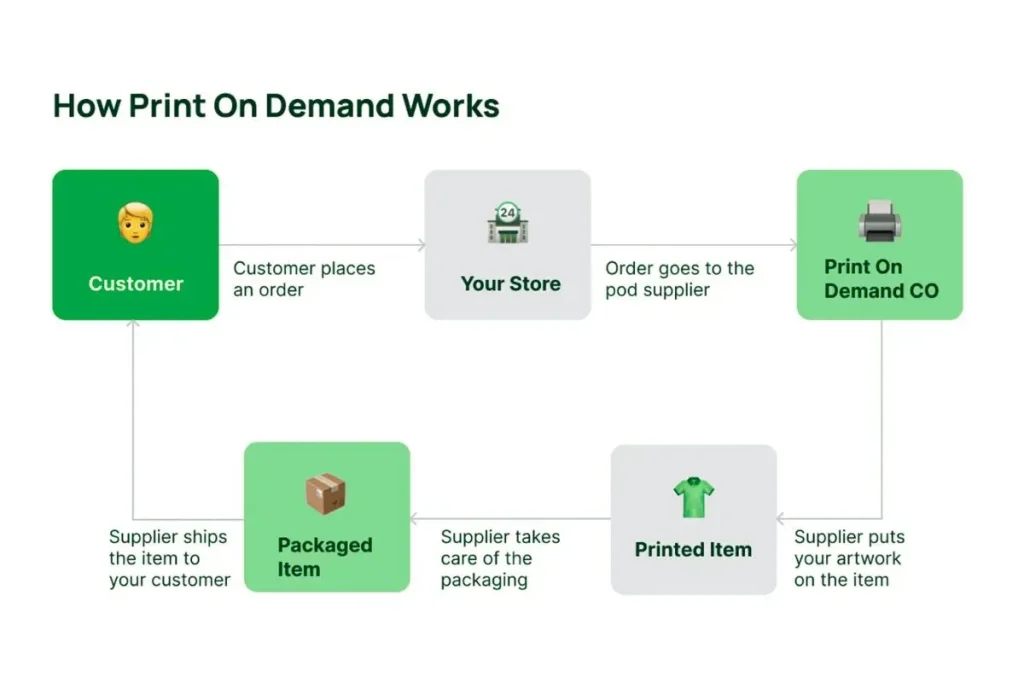
Print on Demand shipping hacks are a practical, repeatable framework that helps creators, brands, and storefronts navigate a crowded market by turning shipping into a competitive advantage rather than a costly afterthought, and they translate complex logistics into repeatable routines, documentable metrics, and clear decision trees that teams can follow across product lines, seasons, and regions. By examining the cost levers—POD shipping costs, carrier rates, packaging, and labor—and tying them to concrete improvements in speed and reliability, these hacks show how small, deliberate changes can compound into meaningful savings over time, ultimately delivering happier customers and higher repeat purchase rates across product lines and markets. The key is to align the goals of fulfillment optimization with customer expectations, leveraging Print on Demand fulfillment best practices to minimize handling and maximize accuracy, so orders move smoothly from click to doorstep as you scale, integrate cross-functional teams, and measure fulfillment latency, pick rates, and error rates to guide continuous improvement. Deploying effective shipping strategies for POD means selecting the right mix of regional hubs, rate-shopping tools, and transparent labeling, while also designing packaging that protects the product without adding unnecessary bulk, which directly impacts POD shipping rates, reduces transit time, lowers damage risk, and creates reliable benchmarks for performance reviews. This guiding narrative leads you through practical steps, real-world examples, and testable hypotheses to help you optimize every touchpoint in the POD shipping journey and sustain improvements long after initial wins, while encouraging teams to document lessons learned and revisit assumptions quarterly for rapid adaptation.
If you prefer different terms, these ideas translate into print-on-demand logistics optimization, on-demand order fulfillment tactics, and smart e-commerce dispatch strategies that reduce handoffs and speed delivery. Viewed through an LSI lens, you’ll hear about inventory positioning, regional distribution centers, rate shopping, and label accuracy as complementary signals that help you balance cost, speed, and reliability. The focus shifts from a fixed term to a broader ecosystem of partnerships, technology integrations, and data-driven workflows that keep POD operations resilient during demand spikes. Whether you call it fulfillment efficiency, dispatch optimization, or shipping performance, the underlying principles remain the same: consistency, visibility, and proactive communication that reassure customers. In practice, this means mapping flows, aligning SLAs with partners, and testing changes in a controlled way to ensure scalable results.
Understanding POD shipping costs and hidden charges
Print on Demand shipping costs extend beyond the base carrier rate. To optimize, you must map the full cost structure, including POD shipping costs, carrier rates, dimensional weight charges, and surcharges for remote zones or fuel. Packaging and fulfillment labor also influence the total, and returns can add cost if not managed well. By recognizing these components, you can target specific levers—such as POD shipping rates and packaging optimization—without sacrificing customer experience.
Begin with a comprehensive audit of each order’s journey from click to doorstep. Document the packaging size and weight, time spent on picking and packing, labeling, and any returns processing. This cost-awareness fuels a data-driven approach to fulfillment optimization, helping you identify where small changes in packaging, labeling accuracy, or carrier selection yield meaningful reductions in POD shipping costs and improvements in speed.
POD shipping rates and carrier strategy: how to save on shipping costs
Reducing POD shipping rates starts with intelligent carrier selection and rate comparison. Use rate-shopping tools and integrated fulfillment software to surface savings by evaluating multiple carriers for each route and service level. Remember that POD shipping rates are not fixed; timing, route, and service level can produce substantial variance that you can exploit without compromising delivery speed.
As volumes grow, negotiate better terms with your carriers. Leverage tiered discounts, volume-based incentives, and flat-rate options that align with your product mix and peak seasons. Combine these negotiations with regional fulfillment to shorten transit and reduce last-mile charges, creating a balanced approach to POD shipping costs and overall profitability.
Fulfillment optimization for Print on Demand: speeding up fulfillment and accuracy
Fulfillment optimization is the engine that turns strategy into measurable speed gains. Standardizing packaging and packing procedures reduces variability, while batch processing and automation lower idle time between steps. Integrate your storefront, WMS or fulfillment system, and carrier API so labels and packing lists generate automatically, reducing manual labor and error rates.
Ongoing visibility is essential. Track order cycle time, packing accuracy, and outbound scan rates to identify bottlenecks. With data-driven routing and synchronized inventory across hubs, you minimize backorders and accelerate delivery, delivering on the promise of Print on Demand fulfillment with reliability and speed.
Print on Demand shipping hacks you can implement today
Print on Demand shipping hacks are practical steps you can apply with modest changes to your current setup. Start with regional fulfillment centers to cut transit times and reduce last-mile costs, then right-size packaging to cut dimensional weight charges. Use rate shopping and negotiate better POD shipping rates while keeping service levels intact, and consider a free shipping threshold to boost average order value without exploding costs.
Other quick wins include consolidating shipments when possible, pre-packing bestsellers, and batching orders during launches to improve throughput. Clear labeling and documented workflows reduce mis-s scans and returns, while pre-labeling select SKUs speeds peak-period fulfillment. Each tactic lowers POD shipping costs and speeds delivery, supporting a consistently positive customer experience.
Choosing partners and building a resilient POD shipping strategy
Partner selection matters almost as much as internal process design. Evaluate carriers for geographic reach and service levels, the breadth of your fulfillment network, and the technology that enables rate shopping, inventory synchronization, and automated labeling. A thoughtful mix of internal processes and external partners can dramatically improve POD shipping costs and fulfillment reliability.
When contracting, seek cost transparency and scalable SLAs. Request references in your product category, specify pricing for shipping, handling, and surcharges, and ensure your agreements accommodate seasonal spikes. Coupled with ongoing process standardization and continuous optimization, the right combination of internal discipline and external partnerships yields sustainable shipping performance and higher customer satisfaction.
Frequently Asked Questions
What are the most impactful Print on Demand shipping hacks to reduce POD shipping costs?
Start by mapping your POD shipping costs and applying practical hacks such as regional fulfillment centers, right-size packaging, rate shopping, and negotiated POD shipping rates. Regional fulfillment can cut transit times and last-mile costs, while lighter packaging reduces dimensional weight charges. Use rate shopping tools to compare carriers and service levels, and formalize shipping rules to automate selection and pricing.
How does fulfillment optimization influence shipping strategies for POD?
Fulfillment optimization focuses on standardizing packaging, automating label and documentation flows, and batching orders to speed fulfillment. This directly supports shipping strategies for POD by reducing handling time, improving accuracy, and lowering POD shipping costs through more predictable operations.
What factors should I consider when selecting partners for POD shipping and fulfillment to improve efficiency?
Consider carrier coverage and service levels, fulfillment network footprint, technology integration, reliability/SLA, and transparent POD shipping rates. A partner with regional hubs and rate-shopping capabilities supports fulfillment optimization and Print on Demand fulfillment.
How can rate shopping and negotiated POD shipping rates lower costs without sacrificing service quality?
Use rate shopping to compare multiple carriers by route and service level, and negotiate tiered discounts based on volume. Implement shipping rules in your store to automate carrier selection, reducing POD shipping rates and overall POD shipping costs while maintaining delivery speed.
What common mistakes should be avoided when implementing Print on Demand shipping hacks?
Avoid over-optimizing a single metric at the expense of speed, accuracy, or customer experience. Don’t ignore international implications, rely on a single carrier, skip packaging tests, or neglect data hygiene. Regular monitoring and data-driven adjustments keep fulfillment optimization and Print on Demand fulfillment on track.
| Aspect | Key Points / Tactics | Notes / Impact |
|---|---|---|
| Understanding POD shipping costs |
|
Understanding these components helps you target the right improvement areas and choose the right mix of services. |
| Hacks to cut POD shipping costs |
|
Combine multiple tactics tailored to product mix and scale. |
| Strategies to improve fulfillment speed and reliability |
|
These strategies reduce costs and improve customer satisfaction by delivering on promised timelines. |
| Choosing partners for POD shipping and fulfillment |
|
A thoughtful mix of internal processes and external partners can dramatically improve POD shipping costs and fulfillment performance. |
| Common mistakes to avoid |
|
Avoiding these missteps requires ongoing monitoring, data-driven adjustments, and regular reassessment of partnerships and packaging. |
| Real-world example: a hypothetical POD shop |
|
Shows how structured hacks translate into meaningful business results. |
Summary
Print on Demand shipping hacks, when applied thoughtfully, can meaningfully reduce POD shipping costs and improve fulfillment performance. By mapping the cost structure behind POD shipping, adopting practical hacks for rate shopping and packaging, and investing in fulfillment optimization, you position your business for faster delivery, better margins, and happier customers. The key is to test, measure, and iterate—using data to drive decisions about packaging, carriers, and fulfillment partners. With a deliberate strategy for shipping strategies for POD and attention to POD shipping rates, you can build a scalable, efficient, and customer-friendly POD operation.

